Secretariat’s Virginia Roots: The Meadow Farm to be Auctioned on May 22nd

Guest Post by Danae Peckler, Architectural Historian and Board Member of the National Barn Alliance

Recently listed on Preservation Virginia’s Most Endangered Historic List of 2012, The Meadow Farm, will be  auctioned off on May 22nd at 2:00pm EST. Birthplace of the 1973 Triple Crown-winner Secretariat, the 331 acres that remains of The Meadow is situated within Caroline County, Virginia, just east of Interstate 95. Nearly 34 years after the Chenery family sold the farm, it is now threatened by the development pressures that accompany any property near an Interstate exit. But it is perhaps more at risk from those who do not know its rich, yet humble history.

In 2006, The Meadow was determined to be eligible for listing on the National Register of Historic Places by the Virginia Department of Historic Resources (SHPO).  Although the main house was no longer standing at that time, it was determined that the historic significance of The Meadow as a notable twentieth-century breeding and training farm of Thoroughbred racehorses was clearly conveyed through the physical components that survived from the Chenerys’ tenure.

Extant historic features at The Meadow include a number of training, yearling, stallion and broodmare barns, as well as the foaling shed where Secretariat was born in 1970.  Other historic structures such as machine sheds, hay barns, secondary dwellings, garages, a pump house, and a horse cemetery also remain. But perhaps more telling, and less visible to the “urban” eye, are the various historic landscape features, including the path of the old racetrack, numerous paddocks and pastures, fences lines, farm roads, and field patterns—all of which continue to reflect The Meadow’s equine and historic agricultural use for the past 250 years.
Secretariat’s Foaling Shed has been relocated from the pasture behind the main house to the middle of the old racetrack, where it is preserved as an artifact for State Fair patrons to observe, near the new equine facilities.


The historic buildings, structures, and landscape features at The Meadow comprise the birthplace of a great champion, but these elements also reflect the dedication and hard work of a prudent horseman.  The story of Christopher T. Chenery and his Meadow farm was recently published in Secretariat’s Meadow, a book by Chenery’s granddaughter, Kate Tweedy, and Leeanne Ladin.  The book tells the tale of how a man from little wealth came to own one of the most celebrated racehorses in history, and how his family’s ties to a farm in Caroline County carried him back to ‘Ole Virginny.’ In addition to establishing the Meadow Stable, Christopher Chenery was instrumental in the creation of the New York Racing Association (NYRA), the non-profit organization that continues to oversee the Belmont, Saratoga and Aqueduct racetracks, and shaped horse racing on the East Coast for much of the twentieth century.

Building on her father’s dedication, Penny Chenery Tweedy enabled the success of Secretariat, but also the 1972 Derby winner, Riva Ridge.  Penny’s own contribution to sport of Thoroughbred horseracing in the late-twentieth century cannot be understated.  All told, the Chenery family’s hard work has immortalized a little piece of land in Caroline County, and endeared it to the hearts of countless Americans.  The physical landscape at The Meadow continues to tell their story, and the story of so many people (and horses!) that helped bring the farm’s history to life, to those of us who look to listen.

But don’t be fooled, The Meadow is not the horse farm we see in today’s movies.  This farm was not lavishly built by an oil tycoon and it did not become the corporate headquarters of international investors in the racing industry.  Its historic barns and farm buildings are not grandiose in size or architectural detail.  The historic fence lines and gateways on the property are not enlarged signposts—there was certainly no need for billboard-like advertising in Chenery’s era—everybody knew where the farm was located and who was working there.  And if you didn’t, you just had to ask someone local.
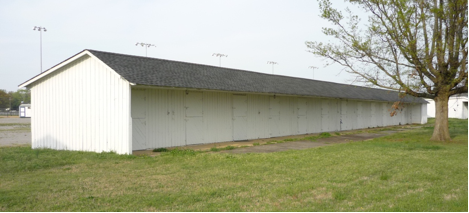
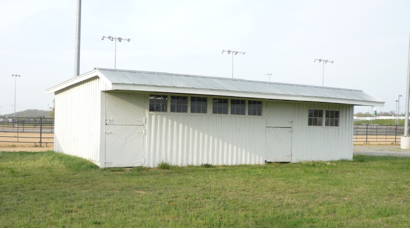
This training barn is one of the few original features remaining on the south side of the farm, and is located in the center of the old racetrack. This barn and the foaling shed are now largely surrounded by pavement and enclosed behind a tall metal fence.


Today, The Meadow continues to be a rare find among celebrated mid-twentieth century horse farms.  Despite improvements made by subsequent owners and new construction associated with the State Fair of Virginia (SFVA), the authenticity of this culturally significant historic landscape remains visible, with much of it lying just beneath the surface.  Aerial photographs taken in the mid-twentieth century reveal that the air-strip, observation tower, and current mansion were added in the mid-1980s, while the SFVA has added parking lots, event buildings, and new roadways since their occupation in 2009.
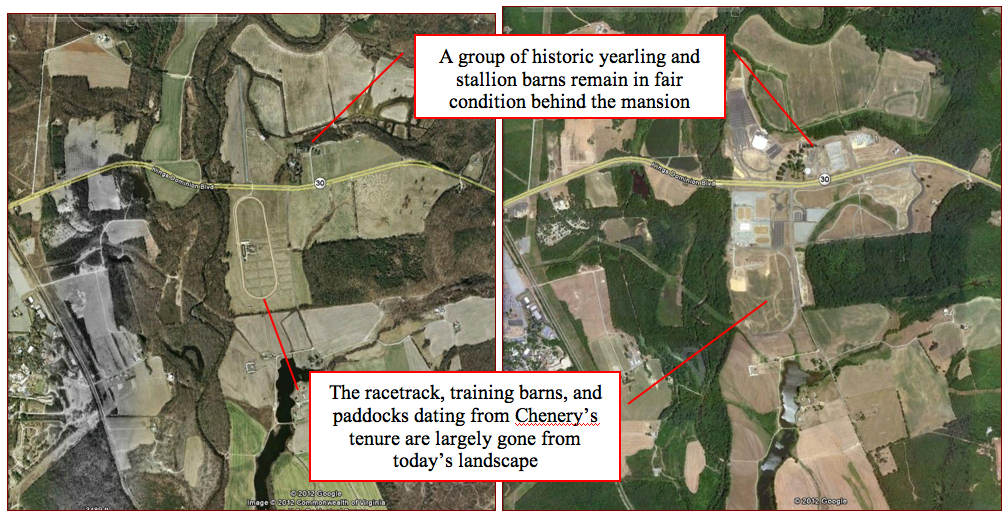
Satellite imagery illustrates the farm’s transition to host the SFVA. Pictured at the left is an aerial view of the farm in 2002, and at right, an image taken in 2010 (Google Earth).


Given the farm’s high-level of historic significance, it is hoped that the farm’s new owners will be sensitive to historic fabric that remains of Secretariat’s Meadow farm, and perhaps even restore some of Chenery’s design.  No one needs to gussy up the real deal; The Meadow’s visitors would be better served by even a slice of an authentic experience of Virginia’s most well-known horse farm.

If you are interested in learning more about the farm’s auction next week, please visit the website of Motley’s Auction House and click on the 331-acre Virginia State Fairgrounds Complex in Doswell, Virginia (http://www.motleys.com/index.php).  The auction will be held “on site” and “on line,” but online bidders must be registered by May 18th at 3:00 pm EST.
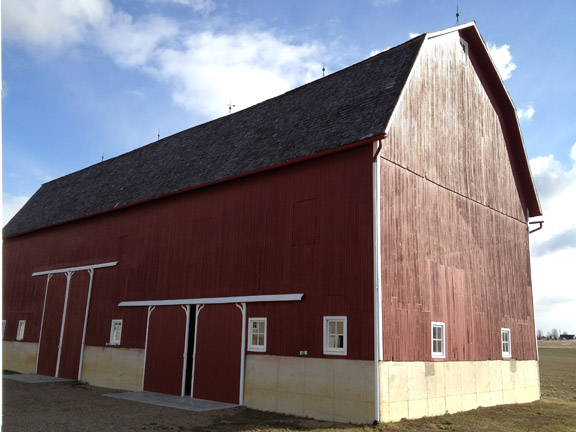
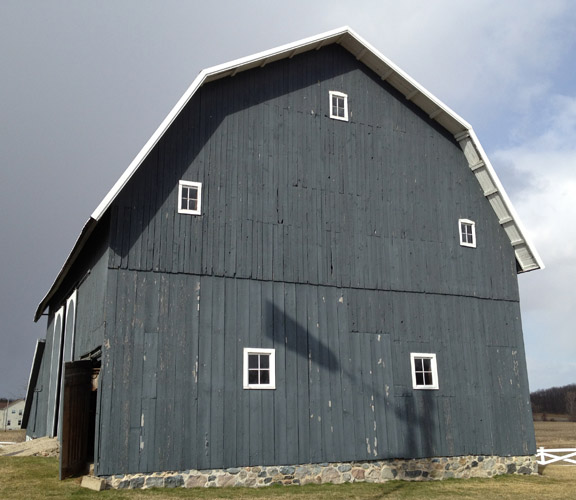
Michigan Barn Tour. Beauties of Central Michigan.

The wind mills worked overtime as a cold wind whipped over the Michigan landscape as snow flurries fell from clouds. Both reminded everyone on the Michigan Barn Preservation Network annual conference bus tour that it was still winter. While the winter was cold, the mood on the tour was warm and excited to see beautiful barns.

There were nine barns on this all day tour. Every barn has a story.

1. Auto-Owners Insurance Company Barn. This barn was originally built to house dairy cattle and contained one of the early milking parlor systems in Michigan. It is one of the very few Gothic style barns in the greater Mid-Michigan area.

The Clare & Judy Koenigsknecht Barn

2. The Clare and Judy Koenigsknecht Barn. This barn was rescued from burn down. It was Clare’s childhood barn where he did chores and played. When he heard it was threatened, he jumped into action. After overcoming family concerns, it became a family project. In order to save the barn, it had to be moved. The Koenigsknecht did just that.

The Noel and Sandy Stuckman Barn

3. The Noel and Sandy Stuckman Barn. This farm complex was beautifully and painstakingly restored to it it’s former glory as it looked in 1915 when the Boss Family built it. This bank barn is typical of the post and bean construction used on many barns on the region. The addition of a refurbished Aeromotor windmill finished the farm out.


The Lewis and Georgianna Alspaugh Barn and Carriage House

The Lewis and Georgianna Alspaugh Barn and Carriage House.

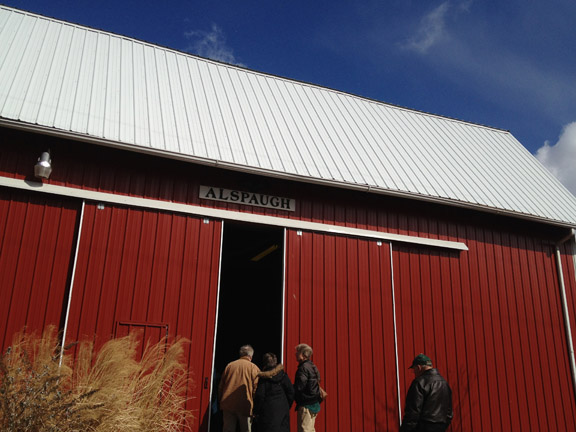
4.The Lewis and Georgianna Alspaugh Barn & Carriage House. When the Alspaughs purchased the farmstead, both the gambrel rood barn and traditional style farmhouse were in poor condition. The barn was built in 1901 and had 10 stanchions for milking cows, a granary, and space for hay/straw storage. They lovingly restored the barn and added a carriage house built in the 1980s with a combination of traditional and modern building techniques.

The Chuck and Rosella Lonier Barn.

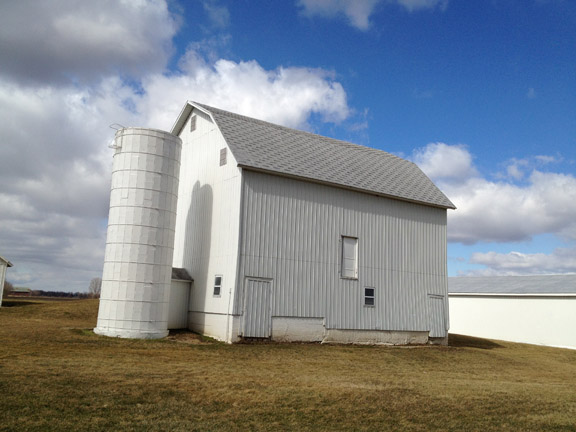
5. The Chuck and Rosella Lonier Barn. This small bank barn is typical of the barns in this area built between the last 1800s and early 1900s being of post and beam construction. The basement part had room for six to ten cows, two to four horses and one to three pens for holding other livestock. A silo was attached to one end of the barn.


The Shady Lodge Farm Barn.

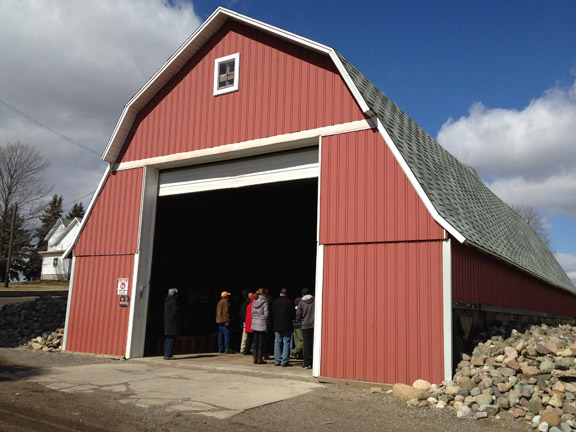
6. The Shady Lodge Farm Barn. Owning a centennial farm, caring about the heritage of a large barn and adapting it to modern agriculture, presented a real challenge to the Lonier Family. They converted the two-story gambrel roof barn into a one-story storage facility with great success.


The Shady Lodge Farm Barn.

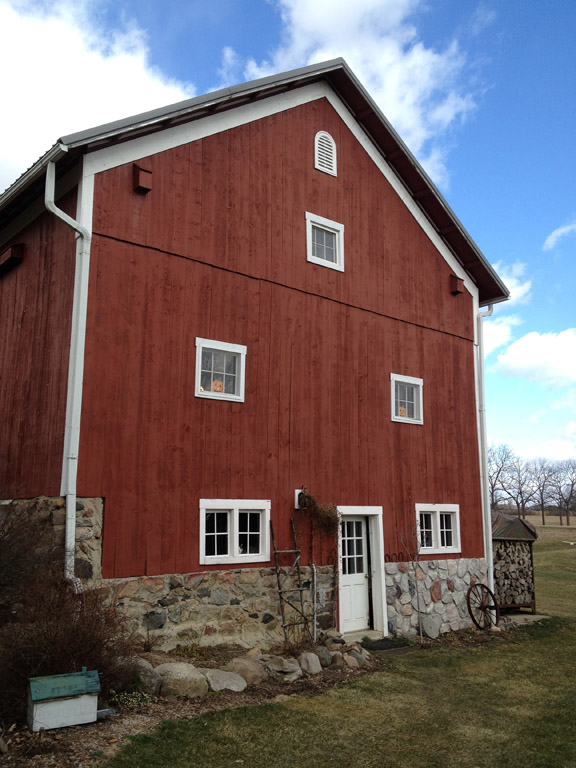
7. The Ron and Jill Albert Barn. Jill Albert is a third generation owner with fond memories of growing up on the farmstead her family moved to 1891. This could be called the “Story Book Farm” with its not-so-bank barn with its gable roof and all the unique little farm buildings. The barn and outbuildings house Jill’s antique business.


Peckham Farms Barn.

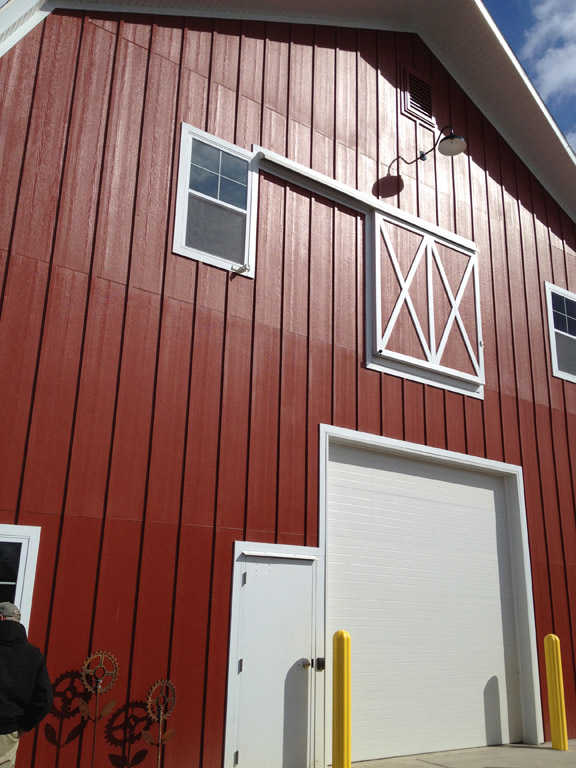
8. Peckham Farms Barn. The barn has a traditional Michigan barn look with white trimmed cross-buck doors, small pane windows, ship’s prow overhang, and roof cupolas; however, it is a modern build. The barn is part of the Peckham Industries newest venture in providing people with disabilities career training.


The Haussman Construction Company Barn & Office (The former Creyts Brothers Farm).

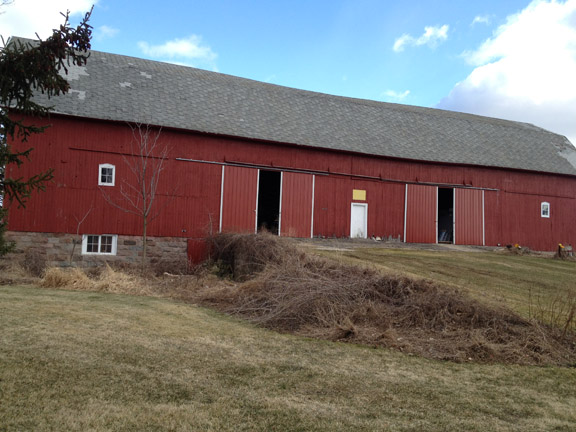
9. The Haussman Construction Company Barn & Office (The former Creyts Brothers Farm). This massive barn was a landmark for those traveling along the road between Detroit and Grand Rapids. Originally there were two barns that sat at right angles to each other and were joined together and a wood silo was added at one end. The barn was one of the few in the area to have carbide lights installed along with running water. Today it is used for storage.

This barn tour highlighted the diversity of barns in one region of Michigan. Thanks to the barn owners who opened their doors to about 100 people!


Buffalo 7th Graders Raise a Model Barn [video]

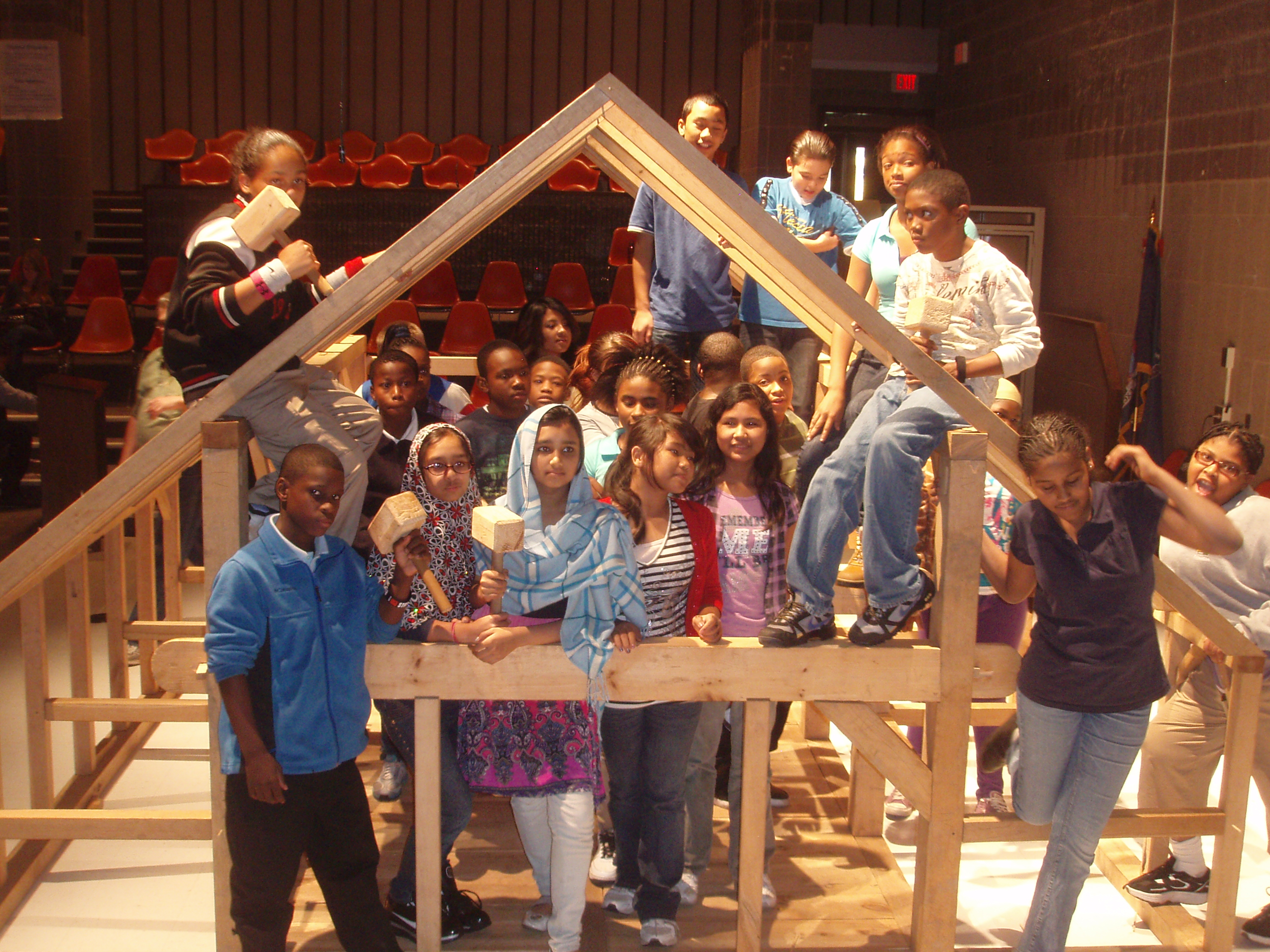
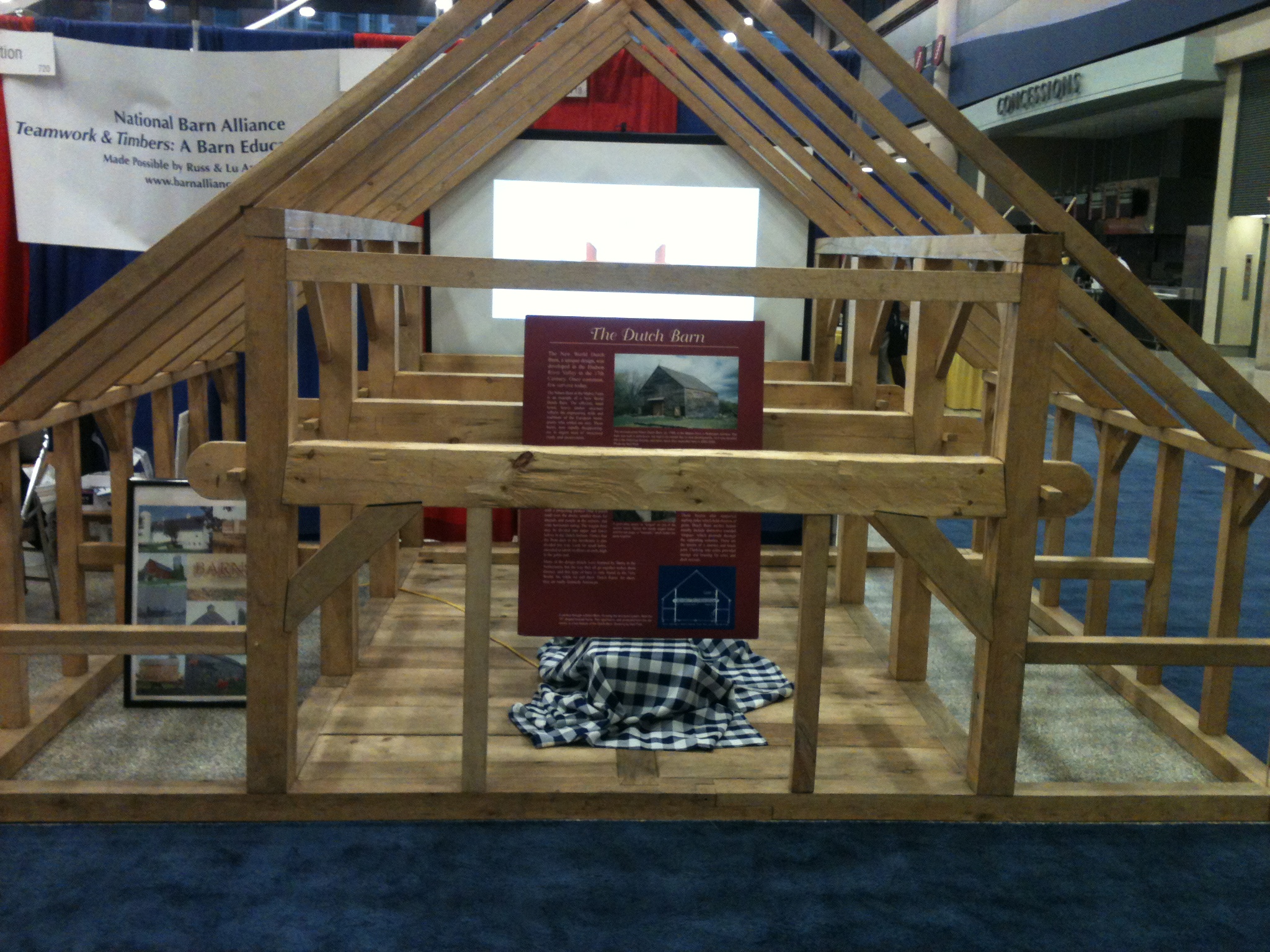
On October 18, over 200 7th and 8th graders from the Waterfront School in Buffalo, NY, built a model of a “Dutch” barn typically found in New York from 130 wooden pieces using only simple hand tools and without nails.

Teamworks and Timbers is the National Barn Alliance educational outreach program bringing youth face-to-face with America’s disappearing rural heritage and trades. The program is designed to plant the seed for preservation while sharing history and teaching science/engineering/construction skills to youth in grades 4-12.

This program was in conjunction with the National Trust for Historic Preservation Conference being held in Buffalo from October 19-22. Stephanie Meeks, President & CEO, National Trust for Historic Preservation observed keenly the kids in the building process.

Back from Buffalo!

The National Barn Alliance is back from the National Trust for Historic Preservation Conference in Buffalo. And we are still giddy from it! We had many successes over that week.


On Tuesday, we raised a Dutch model barn as part of our educational program, Teamworks & Timbers, with 200 students from the Waterfront School in Buffalo.


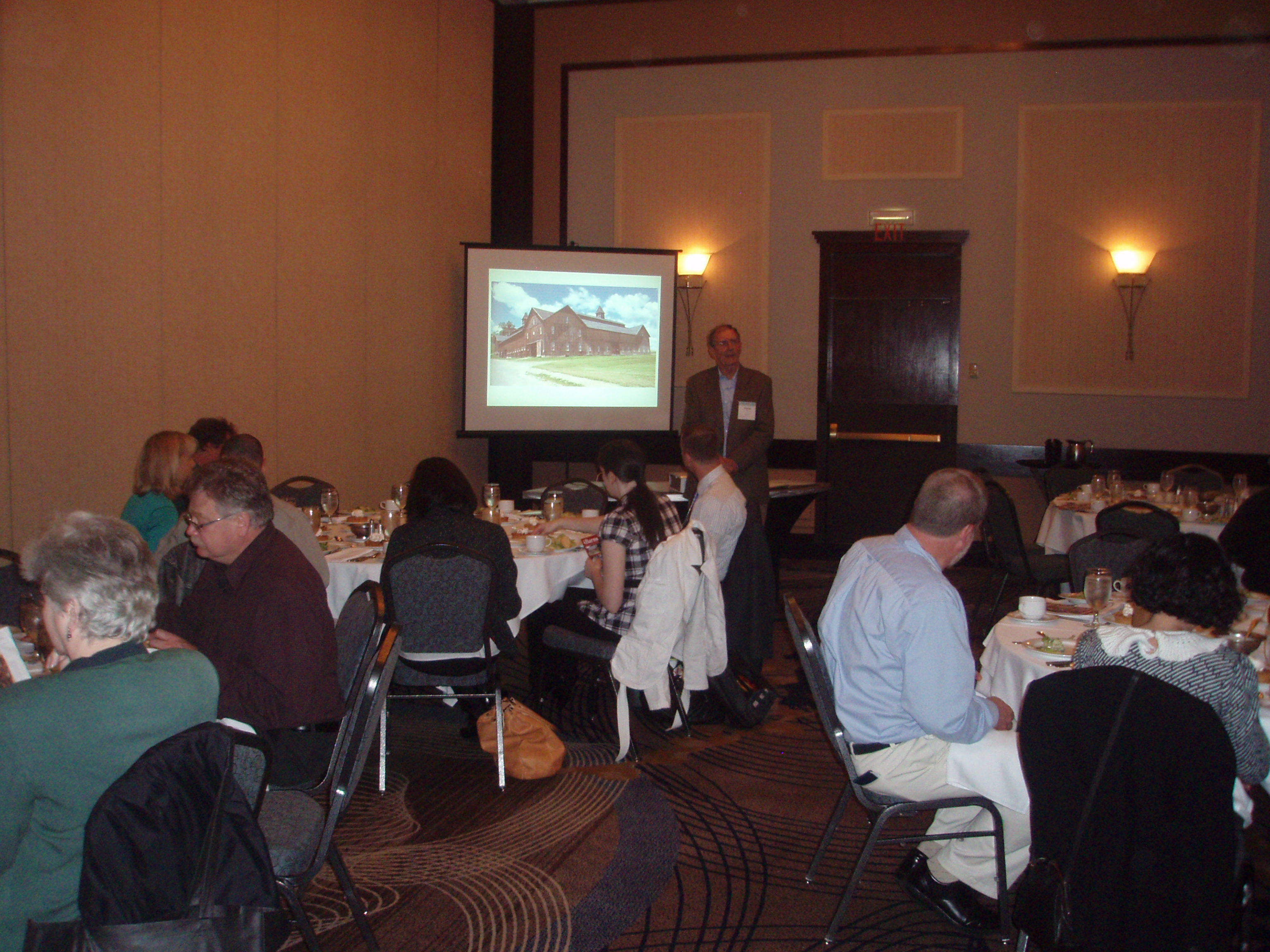
On Wednesday, we held an affinity luncheon for thirty friends of historic barns where we gave away Charles Leik’s maple syrup from his Michigan farm and a barn puzzle during a trivia session.


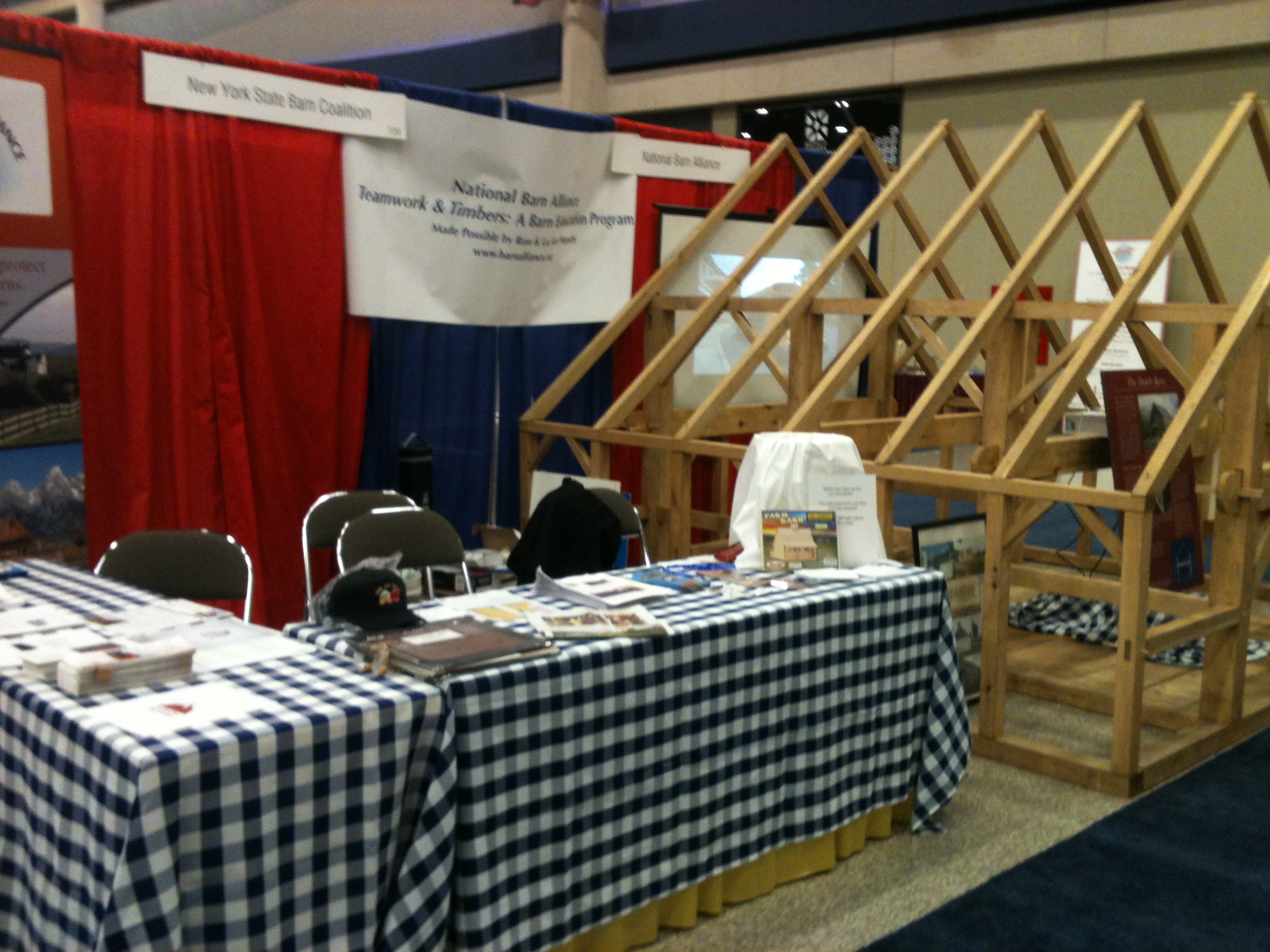
On Thursday, we raised our Dutch model hall in the Buffalo Convention Center. Board PResident, Charles Leik, join over 45 other barn enthusiasts for a tour of the agricultural heritage of western New York sponsored by the New York Barn Coalition and Preserve Western New York.


On Friday, our Dutch model barn was quite the draw in the exhibit hall, but then again how could you miss it?


We are already planning for the National Trust for Historic Preservation Conference next year in Spokane.

“Building The Dutch Barn” Film

The Barn Journal had an opportunity to sit down with film maker and photographer, Brandt Bolding, on his short film, Building The Dutch Barn. Thanks to the support of the Ambesby-Mawby Foundation, this film was made possible.

Brandt Bolding’s photographs have been in exhibited in galleries and museums throughout the Northeast, and have appeared in newspapers, journals, and publications by various preservation organizations in New York State. His work on agricultural life will be the subject of a solo exhibition at The Arkell Museum in Canajoharie, NY, later in 2011. Two of his photographs appeared in the book entitled “Old Homes of New England: Historic Houses in Clapboard, Shingle, and Stone” published by Rizzoli in April of 2010.

He was born in Texas in 1960, lived in a number of Southern states, and in 1994 moved to New York City from Nashville, TN where he was a musician and educator. He became interested in historic preservation in the course of his architectural and interior design work, photographing and recording historical architectural details. This interest evolved into preservation and photographic documentation of the historic agricultural structures and farms in his home state of New York, specifically the Hudson, Mohawk, and Schoharie River valleys. He has traveled extensively in Massachussetts, Vermont, and Maine, photographing the farms, barns, and agricultural communities there as well.

Barn Journal: Can you share with me what was your motivation behind making this film and your photography?
Brandt Bolding: The Film. The initial brief was simply to provide a visual introduction to the model raising process for teachers whose classes would be involved in raising the barn model. The funding provided was only covering the essential pre-production work, scouting, writing, and a day of shooting a class raising the model. As I considered this more fully – it seemed that a teacher looking simply at a “class raising the model” might not necessarily be emotionally or intellectually engaged or drawn into these activities, perhaps after seeing it, some might not even want to do it all.

I can tell you I wasn’t interested in creating something that was just “status quo”…that’s not really who I am or what I do artistically speaking. End the end, it seemed that it might be a perfect opportunity to tell a great visual story…including an introduction to barn timberframing, Dutch barns, the culture that built the Dutch barn, the barn’s unique structure…and then the “class raising the model”. Fortunately I have hundreds and hundreds of hours of video footage of timberframing, barn raising, barns – that I would be able to use in telling that story. Reviewing this footage took an extraordinary amount of time, editing together sequences…some of it I had forgotten about quite frankly…but it was wonderful how it made the film come to life for me.

Also, it occurred to me while working on the film that there have only been two significant pieces of media (in this case books) produced on Dutch barns in the last 43 years. “The New World Dutch Barn: The Evolution, Forms, and Structure of a Disappearing Icon” by John Fitchen in 1968, and later “Dutch Barns of New York”, by Dutch Barn founding member Vincent Schaefer in 1994. This was an chance to produce a new media outreach tool (though modest in scope), that could possibly reach a broader audience than those reading the more in-depth research miscellany produced by ours and other barn preservation societies.

Last, I find that sadly in many quarters of the preservation world, not enough importance is placed on producing high quality image media…whether that be photographs, videos, films..as a part of their structural outreach program. Often time it is an afterthought…or sometimes there is…no thought. The bottom line is that images, such as those in the book “Barns” for which Charles Leik wrote the introduction, or “Dutch Colonial Architecture” by Roderick Blackburn and Geoffrey Gross, can captivate a viewer in a way that nothing else can simply put. As well, there are many people that can’t go charging around the countryside looking at barns like many of us…images bring them there…images can do the heavy lift…

Personally, I started down this road of documenting rural life because of the Fitchen book, but most importantly it was because of the extraordinary photographs of Dutch barns by the great New York photographer Geoffrey Gross. I think many people would be drawn to preservation efforts all across the country if they could only for once see, and be captured by a wonderful visual story. There are great parallels and inferences to be drawn from Teddy Roosevelt’s journeys in the West with John Muir prior to his great conservation/preservation efforts. Once Teddy Roosevelt saw the the breathtaking beauty and the extraordinary value, – he was a changed man. My feeling along these lines is that you cannot preserve what you do not love…and you cannot love… what you do not see.

BJ: Why were you drawn to the topic?
BB: I’m a Trustee of The Dutch Barn Preservation Society…the project was discussed during a meeting…and it was something that very much interested me. I had started shooting motion images in 2007…during several trips along the Hudson and Mowhawk valleys retracing the paths that the author/architect John Fitchen had taken as he researched Dutch barns for his 1968 book “New World Dutch Barn…”. In other words it seemed like a perfect fit.

BJ: What do you hope people will come away from after watching this film?
BB: How simple (technologically speaking) but how extraordinarily effective (and beautiful) timberframing as a building process is. That there was a pre-colonial culture i.e. the Dutch and others from N. Europe living, working, and even thriving for some… in North America. For many of us growing up in America… we think of the Mayflower, the Pilgrims, the English as our earliest history. This Northern European culture brought with them a style of “three-aisled” agricultural building that is fundamentally unique…and dates back to Anglo-Saxon cultures many many centuries ago. Lastly, the greatest hope is that would inspire the viewer to want to see these buildings, to know more about the culture that produced them…and in the end…to be a part of the preservation community.