New Indiana Barn Foundation Hard at Work!

Indiana Barn FoundationA passionate and motivated group of Hooisers have been working hard to establish a barn organization for the state of Indiana in recent months – and what great success they have had in such a short period of time.  The first annual meeting of the Indiana Barn Foundation is coming up on July 12th and the group can already boast of supporting barn preservation legislation!  Last month, members of the organization were in Indianapolis to witness Governor Pence sign Bill 1046–a law that allows for a property tax deduction on historic barns in Indiana.  Way to go Hoosiers and congratulations to Indiana’s historic barns!
We know great things are in store for this wonderful new barn preservation organization, and hope you will lend them your support in the effort.  Below is a description of the group’s purpose and goals taken from their website.  Please share this information with anyone you think would be interested and encourage them to attend the meeting on July 12th at the Indiana state fairgrounds! 


“Indiana Barn Foundation is being established to unite those of us who value the legacy of Hoosier farmers who have worked against the odds, often singlehandedly and with no financial incentive, to maintain and preserve these landmarks. We see Indiana’s historic barns as being an asset to Indiana’s larger cultural heritage; an asset worth preserving by assisting our farmers who struggle to maintain them. 

Our Proposal:  We are establishing, in conjunction with several other organizations, a private, nonprofit 501c3 mechanism to  provide grants to rehab historic Indiana barns. We expect to operate efficiently under the umbrella of the Indiana Barn Foundation, while enlisting the expertise and resources of the Indiana Farm Bureau, Indiana Landmarks, the National Barn Alliance and many other groups who will join us in this work.

To keep this work alive for future generations, we also foresee the Indiana Barn Foundation some day financing educational programs, producing workshops and educational materials, and surveying and documenting existing barns.

The effort to save Indiana barns will need the support and dedication of many people, and we invite you get involved in this exciting undertaking! We have the opportunity today to do more than despair at the disappearance of another Hoosier landmark.  Indiana barns have stood as a silent testament to the hard work and resourcefulness of those who settled this grand land of ours. We have a responsibility to care for and preserve our heritage now, and for future generations.”

 It couldn’t be said any better; kudos from the NBA to the Indiana Barn Foundation!

My Favorite Place by Amber Stutzman, Age 11

This guest post was uncovered by our Past President, Charles Leik, who has an knack for finding enchanting things about barns.  It has been reprinted here by permission from the October 31, 2013 The Peoples Exchange, Shipshewana, IN and the author who lives on an nearby Indiana dairy farm.  Thanks for sharing your article with the NBA, Amber!


At home, I have a favorite place.  Our big creaky, old barn.

It has a mingling, musty, scent of aged wood, cows, grain, sweet alfalfa hay and scratchy old coiled rope.

The barn isn’t too quiet, but it isn’t too loud, either.  The barn swallows’ chirps, the young calves’ bawling, the little kittens’ meows, and the soft, whispering wind just outside join together in a perfect melody, and to me, the song of the outdoors is better than any choir or singing group anywhere.  But, in addition, the barn has a nice, peaceful silence, one that is just right, and relaxing.

The barn has plenty of space where you can just lay there for a while, just thinking, seeing and breathing in everything.  It has lots of spider webs, and warm sunlight pours onto the dusty floor through the holes in the creaky ancient wooden walls.

Sometimes I pack a little picnic lunch, and I’ll eat it in the haymow, sharing teeny bits of bread, or meat with the kittens that are sitting by my feet begging and they’ll start purring away like a little washing machine motor.

Inside the barn, an enormous pile of fresh grain fills the air with a pungent scent, that waves through the air filling every little nook and cranny.  Children can play in the big pile for hours at a time, having the time of their life all the while.  When they try to race up it, the grain crumples under their feet like sand, and every step they try to take up, they slide two steps down.  Then, on the way down, instead of bothering with the grain burying their feet with every step they take, they just flop down, and make their way down as if it was a slide.

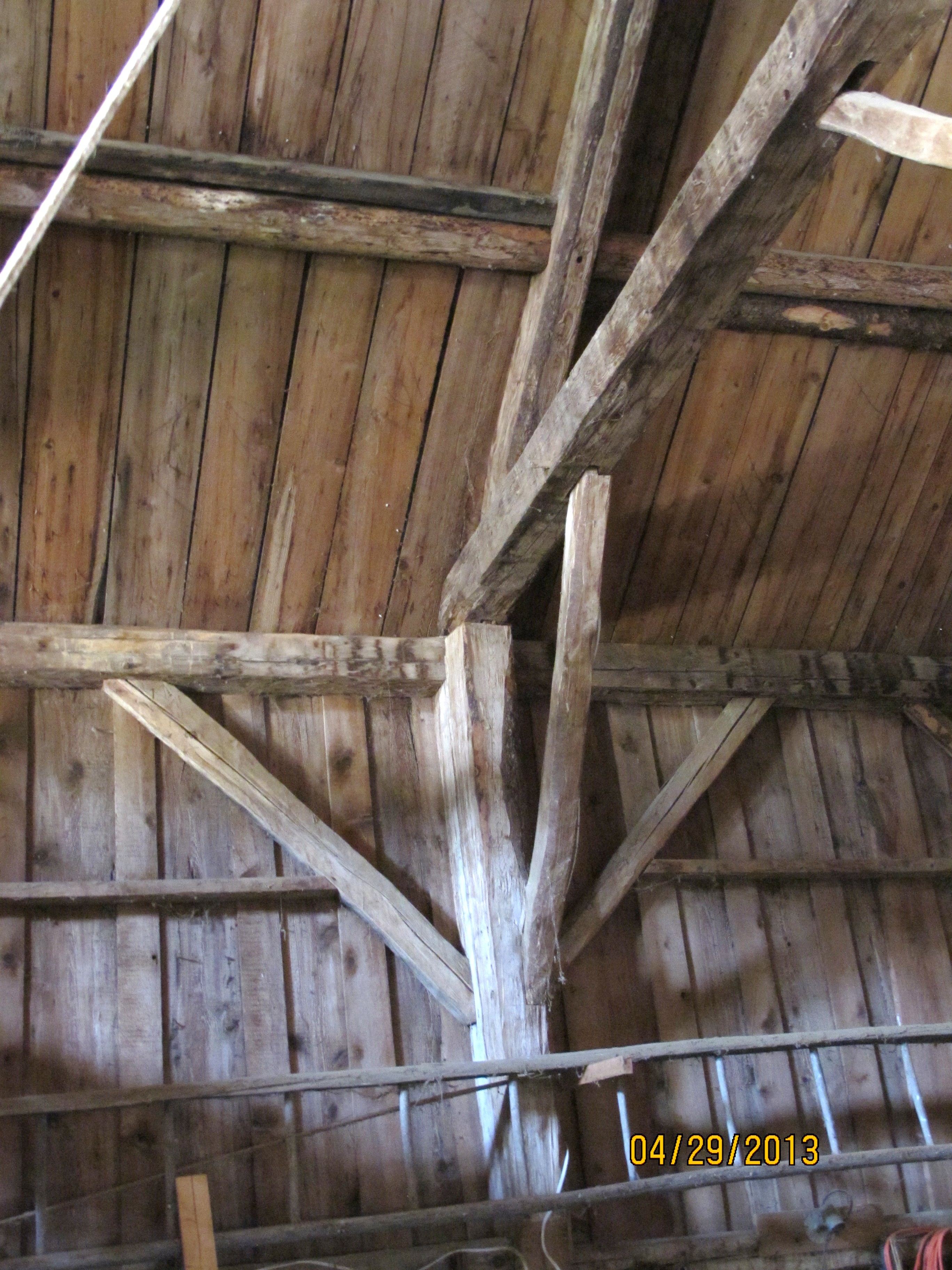
The barn is a masterpiece.  There are very complicated patterns in the beams that are holding up the tall walls and high ceilings that are taller than a humongous old oak tree, like a puzzle, or a difficult crossword.

The barn was built so long ago that there aren’t any nails in the gigantically tall, wooden beams and poles.  Instead, there are wooden pegs in their place.

In the barn, square bales of luscious green hay stand, piled all the way up to the high roof.  They fill the air with a sweet scent.  The bales are scratchy, and give you splinters if you climb them.

The floorboards in the barn croak and moan, creak and groan under my feet as I walk across them.  They are wooden and dusty and covered with wheat, and straw, and hay, and grain.  Without them, I would not be able to go up into the hayloft.  The planks are an important piece of the barn.

In the barn, we have lots of scratchy, stale rope.  In the “olden days” it was used to swing loose hay across the barn.  Now, you can use it to swing yourself across the barn!  You grab it, climb up a couple of straw bales, and jump.  You swing way to the other side of the barn, then back again, on and on, until the big swing across the barn dwindles down to a little swing for a few feet.  Then you jump off, and start all over again, until you get tired, and you think that you are done swinging for the day.

The steel cow stanchions stand vacant, empty, spider webby, and dusty like an old abandoned lot.  When you turn the old, almost antique latches, they click and then go “eeeeeee”.  The metal is always cool to the touch, even in the middle of the hottest summer.

The wooden calf stalls beside the stanchions are all full of young, bawling calves.  The pens are stained with manure from calves of the past.  Straw and sawdust, litter the cement floor, and the ground is dusty from the sawdust.

In the barn, silky spider webs hang thick.  They are sticky, heavy, tangles of strong, webby, stringy lines.  If you walk into them, they stick to your face, and if you try to pull them off, they cling to your finger like super glue.  Spider webs make the barn look cozy.

In the barn the ceilings are tall.  The filtered yellow plastic covering little of the roof lets in a few warm rays of summer.  The rest of the roof is covered with aged rusty metal.  When it rains, the drops leak through the many gaps and holes in the ceiling.  Without the roof, the barn would be incomplete.

On the outside of the barn, there is a big cement hill leading to the haymow.  The old splintery, wooden handrails at the sides are all falling off.  The cement is dirty, weathered, and covered with patches of grass, weeds, and manure.  The hill is hollow in the middle where we park our dirty smelly old manure spreader.

On the upper outside of the barn near the roof, there are white plastic letters that spell “THE OLD HOMESTEAD”.  The letters are clean, and whenever one of them falls down or gets damaged, we replace them.  They are the pride of the barn.

The barn is nice and warm in the winter, and nice and cool in the summer.  It blocks out the harsh winter winds, but lets in the summer breezes.  The barn is absolutely huge, but not empty.

The barn is a sleepy haven for the animals.  It is musty, dirty, and almost ancient, but they don’t seem to care.  They like the barn just the way it is, and so do I.

On the outside, the old peeling red paint on the barn is just enough for you to feel like you have been inside it about a million times, and that you have known it all your life.  The barn is already over a hundred years old, and still, the rough weathered, sturdy wood stoutly, stands tall.  The barn is my most favorite place in the world.

At home, I have a favorite place.  Our big, creaky, old barn.


In Madison, New Hampshire – A Tour of 100 Year Old Barns

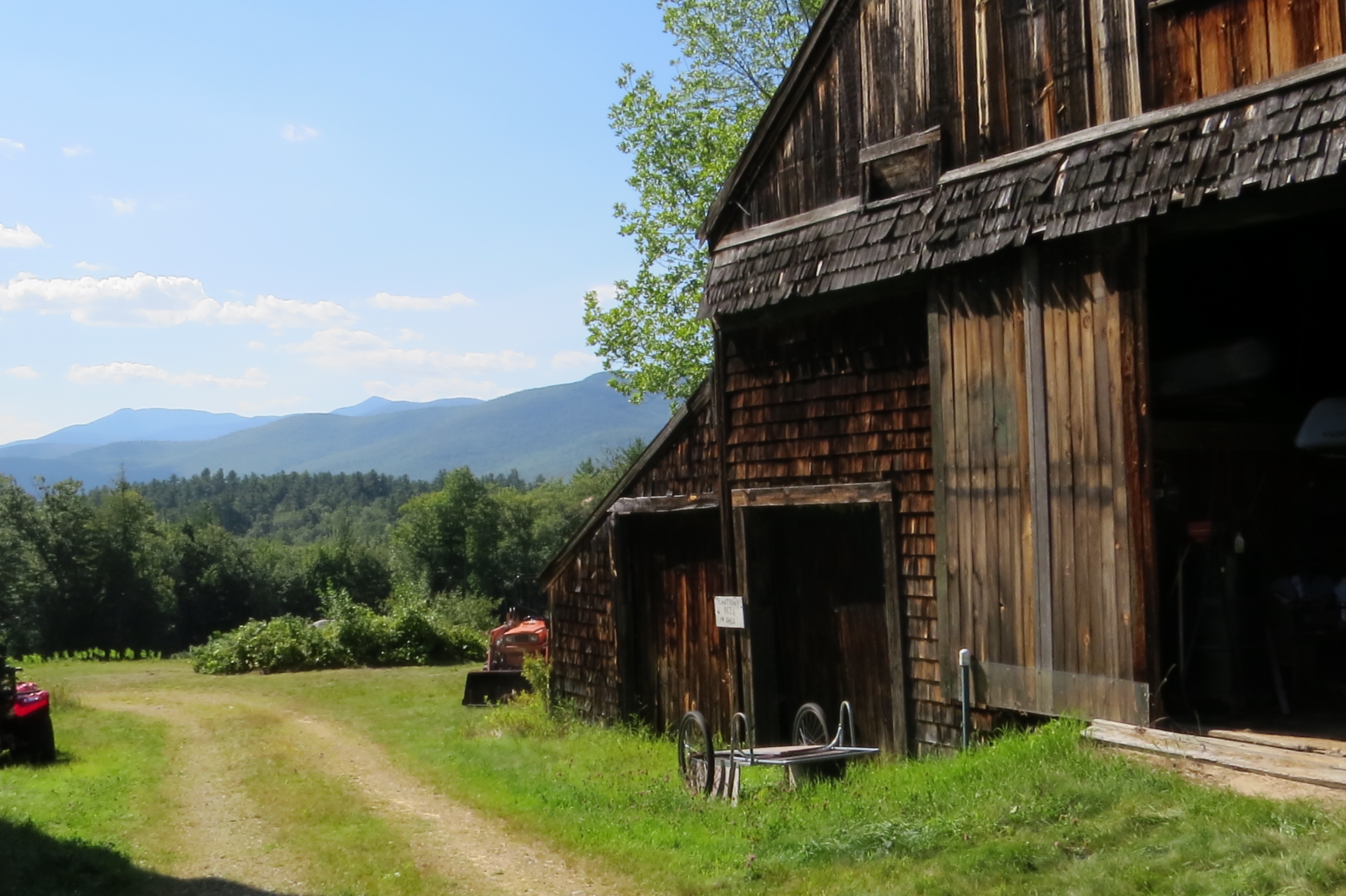
view from Joy Farm

View of Joy Farm

This post comes from our barn-loving friends in Madison, NH.  This is the first year of their barn tour, but it will certainly not be their last!  What a great event!

The Madison Historic Barn Tour weekend, July 11 & 12, 2014 is fast approaching. With seven wonderful old 18th and 19th century barns on the tour, including E.E. Cummings’ Joy Farm, interest is growing rapidly.  The small Town of Madison is located in the beautiful Mount Washington Valley of New Hampshire. Incorporated in 1852, Madison has a long and interesting history as a farming and tourist community.

Town tax records reveal that there are approximately 50 barns in Madison which are over 100 years old.  The Friends of Madison Library (FOML), a 501(c)(3) non-profit supporting the local public library, has organized this weekend fundraiser (be sure to visit their website).

Barns on the tour, in addition to Joy Farm, include the Ambrose Barn built in the mid-1870s by then owner Henry Harriman with timbers from his neighbor’s barn. Nearby is the Old Public Burying Ground where several of Madison’s Revolutionary War soldiers are buried.

Ambrose Barn

Ambrose Barn

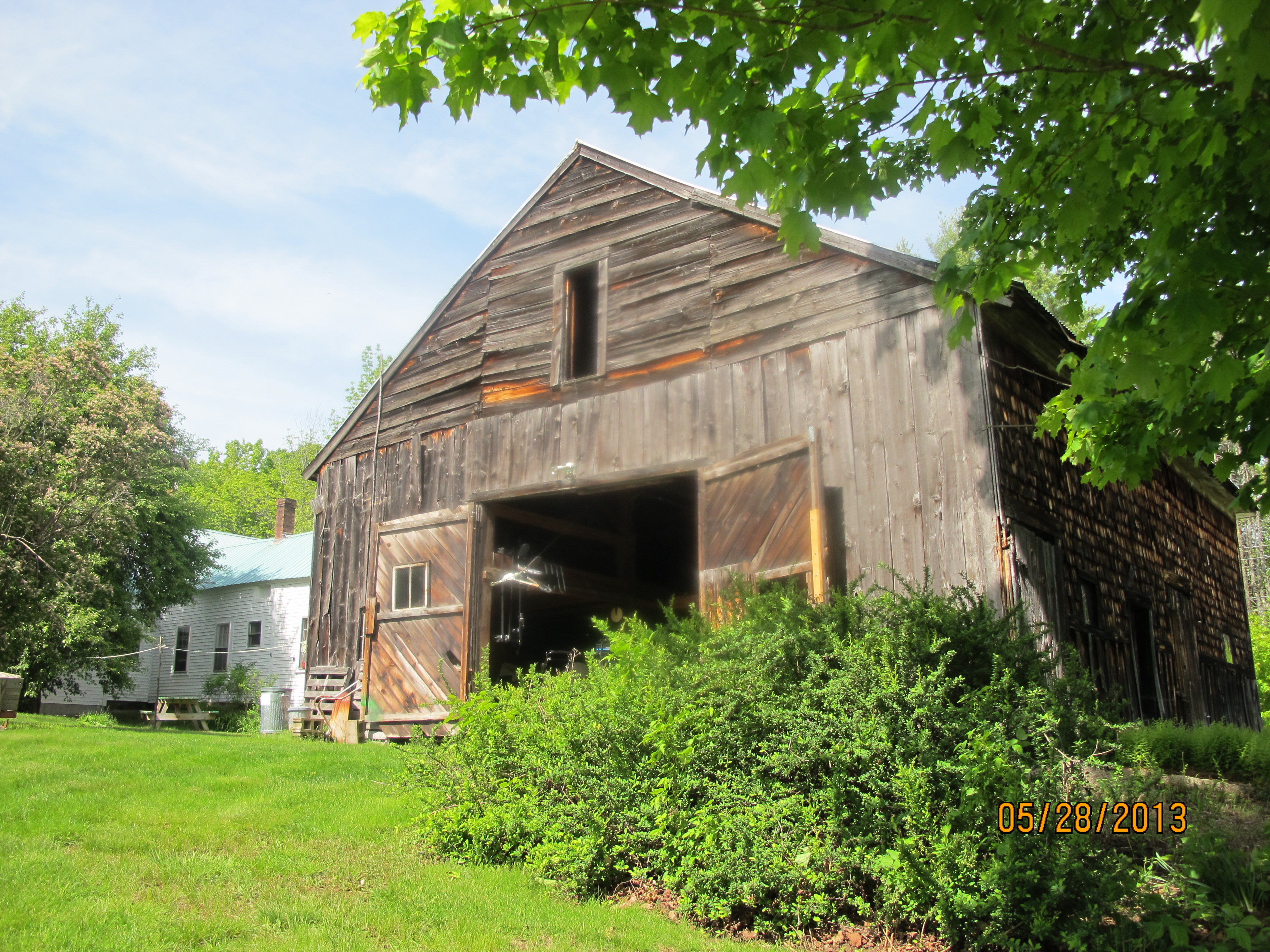
The Gilman Barn built circa 1795 as a working farm has been in the Gilman family since then. Built with wooden pegs and resting on a loose field stone foundation, Alan Gilman’s barn is as “square” today as the day it was built. The large “Gilman Cemetery” across the street is the final resting place of generations of Madison residents, including the original owners of several of the Tour Barns.

The Henry Harmon place c 1850 may have been built earlier at Madison Corner, then moved by oxen to the open meadows of Goe Hill. A painting of this barn by Andrew Haines was recently on display at the Boston Museum of Fine Arts.

Come to Madison to see all seven tour barns. A list of the other forty plus Madison barns over 100 years old will be available for those who want to do more independent exploring. Directions to the numerous fascinating local cemeteries may lead you to find the resting places of former barn owners, or ancestors of your own. Pick up a copy of Mary Lucy’s book Cemeteries and Graveyards of Madison, NH from the Madison Historical Society. Browse the Barn themed Art Show, purchase barn note cards and photo sketches, or place a bid on a photo or professional work of art in oil or watercolor at our Silent Auction.

Gilman Barn

Gilman Barn

Don’t miss barn historian Bob Cottrell’s talk and discussion of 18th and 19th century New England Barns on Friday night at the Madison Library. Bob has a Master’s Degree from the Winterthur Program in Early American Culture. He has worked in the history/museum field since 1980. Previously, Bob worked at the Smithsonian’s National Museum of American Art in Washington, D.C., the Crowley Museum and Nature Center in Sarasota, Florida, the St. Petersburg Historical Museum also in Florida, the Conner Prairie Museum in Indiana and at Bilkent University in Ankara, Turkey. In 1996 he became the founding Director of the Remick Country Doctor Museum and Farm in Tamworth, New Hampshire, another great place to visit while you are here. Bob’s talk is included in the price of the Barn Tour.

At the southern end of the Mount Washington Valley, the village of Madison is just minutes away from numerous hotels, picturesque B&Bs, wonderful restaurants and the tranquility of our natural setting around Silver Lake. Make plans now to spend a day or two before or after the Barn Tour.  Bring a blanket and buy a Barn Tour Bag Lunch to enjoy at one of our Town Beaches or in the garden at the Library.

Tickets on the weekend of the Tour will be $20 per person. Advanced tickets may be purchased before July 1, 2014 for $15 per person, payable by check to Friends of Madison Library at PO Box 240, Madison, NH 03849.

All proceeds of Barn Tour events benefit the non-profit Friends of Madison Library. For more information send an email to FOMLibrary.NH@gmail.com

Friends of Ohio Barns’ 15th Annual Conference

Knox County to host the 2014 FOB Conference and Barn Tour!
Mount Vernon will be the headquarters of Friends of Ohio Barns 15th annual Barn Conference and Tour, April 24th – 26th, 2014. The conference will explore adaptive re-use of barns as a viable way to save historic barns. Knox County is the Heart of It ALL. Within its borders lies the geographical center of Ohio and the colonial city of Mount Vernon, the county seat. Knox County where one finds brick streets, historic homes, recreational trails, camping, elegant bed and breakfast inns, two stunning College campuses, and notable museums. Not to mention the flora and fauna in the rolling hills and fields.

IMG_8356

Knox County has always been and continues to be an agricultural community. Drive any rural road and one will find numerous examples of farm life and the age old icons of an agrarian society. The Barn, the behemoth that has stood out back of the farmhouse for well over a hundred years, built with skill, adapted out of necessity, and the center of family life and survival. Thursday will feature an afternoon workshop by the Junior Barn Detective (JBD) on moving and restoring a barn for adaptive reuse. On Friday the bus tour will include several unique barns and lunch along the way. Take a trip back in time and experience the heritage of Knox County at the Knox County Agricultural Museum. It began its historic collection in 1984. Devoted almost exclusively to farm and home lifestyles of the 1800s and early 1900s, the Museum houses more than 3,000 items, each depicting how our forefathers lived and worked.
Saturday is the annual conference with a slate of outstanding speakers, vendors, and displays.  To register for this outstanding conference go to http://www.friendsofohiobarns.org/. Come a day or two early or stay after and experience “Knox County, the Heart of It All.”

Bucks County Community College Sets Rural Stage for NBA’s 2014 Winter Meeting!

**Our 2014 Winter Meeting was canceled due to inclement weather, but the NBA is trying to partner with BCCC once again in 2015!  This time around, the meeting will take place on February 21-22, 2015.

This guest post comes from Patricia Fisher-Olsen, Coordinator of the Historic Preservation Program  and lecturer at Bucks County Community College (BCCC) in eastern Pennsylvania.  This year BCCC has agreed to host the NBA’s Winter Meeting at their 200-acre Newtown campus where several of the school’s NRHP-listed buildings have been re-adapted to serve as classrooms – enhancing the learning environment for all its visitors!  From 11:30 am to 1:30 pm, Saturday, February 15th, the NBA’s Winter Meeting is open to the public.  We encourage any barn enthusiasts in the vicinity to join us as we learn more about barns in the region and what all the students at BCCC are doing to save them!  The lecturers are free though small donations to help cover the cost of lunch are welcome.

In 1991, BCCC became the first school in the country to offer a 24-credit Certificate Program in Historic Preservation and since then the campus program has grown and expanded online, offering students the unique opportunity to complete their Historic Preservation Certificate entirely over the Internet. Students opting to take courses on our Newtown campus will find them immersed in a working preservation laboratory. Classes and lectures are taught in buildings listed on the National Register of Historic Places, surrounded by historic landscapes and formal gardens. Students opting to take courses through our online campus will find themselves immersed in the preservation laboratory of their own communities.  The online courses are designed to leverage the historic resources in all areas of the country.

BCCC Students at Work Documenting Best Barn.

BCCC Students at Work Documenting Best Barn.

In 2008, Bucks students won the coveted National Parks Service/American Institute of Architects’ Charles E. Peterson Prize, which annually recognizes the best set of measured drawings prepared to Historic American Building Survey (HABS) standards by college or university students.  At BCCC, the HABS program operates as part of the institution’s Historic Preservation Department.  The program offers students the opportunity to measure and record the architectural details of historic structures as they exist today, before they are further altered by time, nature and people.  By studying clues, such as the changes in mortar and other materials applied to a structure, HABS students document both a building’s history and the history of the people who made the changes.

Since 1991, Bucks County Community College faculty member, Kathryn Auerbach, has led several teams of HABS students as they measured and documented historic structures here in Bucks County and across the country.  The recorded findings of the students, many of whom have no previous architectural or building experience, have become part of the collection at the Library of Congress to be used for future research.  The college competes for the best architectural measured drawings of a historic American structure in the Charles E. Peterson HABS Prize Competition sponsored by the National Park Service, the American Institute of Architects and the Library of Congress.

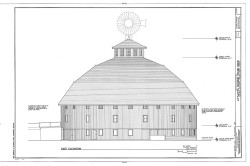
Measured Drawing of Best Barn, Frederick, MD.

Measured Drawing of Best Farm Stone Barn, Frederick, MD (BCCC 2008).

The yearly contest is highly competitive, with entries from architecture and design programs at nationally recognized universities. Several of BCCC subsequent HABS classes have gone on to secure a Honorable Mention,  4th place, 3rd place and even 1st place in the competition. In 2008, BCCC – the only community college entrant – won a highly coveted 1st place award for their work with the National Park Service on the Best Farm Stone Barn, located on the Monocacy Battlefield in Frederick, Maryland.

In Bucks County during the 1930’s, many of the HABS projects involved old stone barns that were very prevalent in this part of the country.   Today, thirty percent of the barns that were documented no longer exist.  Without the HABS sets of measured drawings and photographs, no evidence would exist of some of Bucks County’s beautiful stone barns, nor of the people who built and used them.

Students who participate in the HABS class at BCCC not only learn about historic architecture but also develop important problem-solving skills.  Many of our HABS drawings will be on display during the National Barn Alliance Winter Meeting.