A Student’s Review of the NBA/UMW Winter Meeting Collaboration

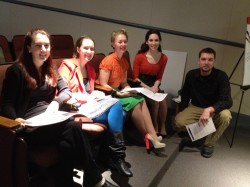
Group of UMW students who made presentations for the NBA Winter Meeting

Group of UMW students who made presentations for the NBA Winter Meeting

Guest post by Catherine A. Brau, a Historic Preservation student at the University of Mary Washington (UMW).  Our sincere thanks to Ms. Brau and the rest of the UMW and UDel students who participated in the Winter Meeting Presentations and shared their findings with us!  

Barn lovers!  The National Barn Alliance Meeting was hosted on campus February 15th – 17th.  The National Barn Alliance is a non-profit organization committed to preserving America’s Historic barns while seeking to educate the public on efforts to preserve barns.  They encourage the documentation of barns and support preservation organizations and programs.  The meeting was a great opportunity to network with fellow (barn enthusiasts) preservationists and learn more about one of our more precious vernacular resources – barns.  Historic barns – and farmsteads in general – are truly becoming a thing of the past as a result of commercialization and evolving technology and the poor maintenance of outdated or unnecessary structures.  More importantly, barns are typically not the focus of surveying and documenting efforts.

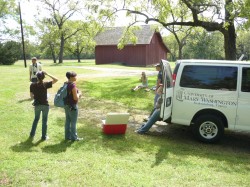
During the conference, students were able to present their research from the Fall 2012 course Agricultural Preservation with Professor Michael Spencer.  Students learned all they could about barns before being set loose to survey and document three local farmsteads – the Houseworth Barn and Arlington Carriage House at Montpelier and Flintshire Corncrib and Granary in Caroline County.  These structures differ in their use and styles, and only the Houseworth barn is still functional, but all three are excellent  examples of 19th century vernacular construction.  Since a majority of texts concerning agricultural buildings refer to national trends, it was interesting to view what was happening on historic farmsteads at a local level (and of course was all the more important to record!).  I personally hope to see this course grow in the future as it offered some great practical and networking experience and really highlighted the importance of vernacular preservation (the first barn my group was supposed to document fell over in a bad storm!).  The National Barn Alliance members in attendance were excited that a younger generation is interested in continuing barn preservation and wanted to learn as much as they could about the student research and local agricultural structures.

While us students put in some hard work researching the farmsteads, we have to send a big THANK YOU out to Professor Spencer and his wife Danae for their knowledge about barns and for the networking opportunity with the National Barn Alliance.  While most of us get the opportunity to be involved in some kind of research with the department, it is a rare occasion that we are able to present said research to our fellow preservationists outside of the department.  These kinds of opportunities, of course, are dependent on us the students – so have fun researching and support your professors when they want you to share it with others!
 

Share Your Story with the NBA: Write for our newsletter, e-news, and blog!

NBA Newsletter ScreenshotThe National Barn Alliance is seeking articles and contributors for our newsletter, “The Barn Door,” our e-newsletter and our blog, “The Barn Journal.”  The “The Barn Door” is bi-annual publication mailed to our membership.  Articles may also be posted on here, on “The Barn Journal,” and shared via the NBA’s Facebook, Twitter, Linked In page, or Youtube channel.

We encourage individuals as well as our state and local barn preservation partners to share updates on their activities. This is an opportunity to share your successes with others working to save historic barns in their own states. Article topics must be barn-focused such as history/preservation, grant programs, kids & education, photos, art, barn facts, endangered barns, saved barns, repair tips, preservation tips, book review, surveys & studies, barn raisings, and tours. We are also taking calendar submissions for conferences, tours and events.

Submission guidelines:

– Suggested length is 300 – 600 words. Photos are highly recommended.

– Send article in a MS Word, iWorks Pages, or as text in the body of the email.  Photos are preferred in .jpeg format as attachments with captions.


Articles for online publication are rolling.  Submission Deadlines for the printed newsletters are:

Fall/Winter Newsletter: August 16

Spring/Summer Newsletter: March 22

Contact us for our easy to use template at info@barnalliance.org.

__

Can you imagine an America without barns dotting the plains or hills? We can’t. Join us in preserving our heritage. Before it is lost. Join us

The Doncaster Barn or Bayers Barn

Round Barn - Cropped


A guest post by NBA member, Jill Hotchkiss.

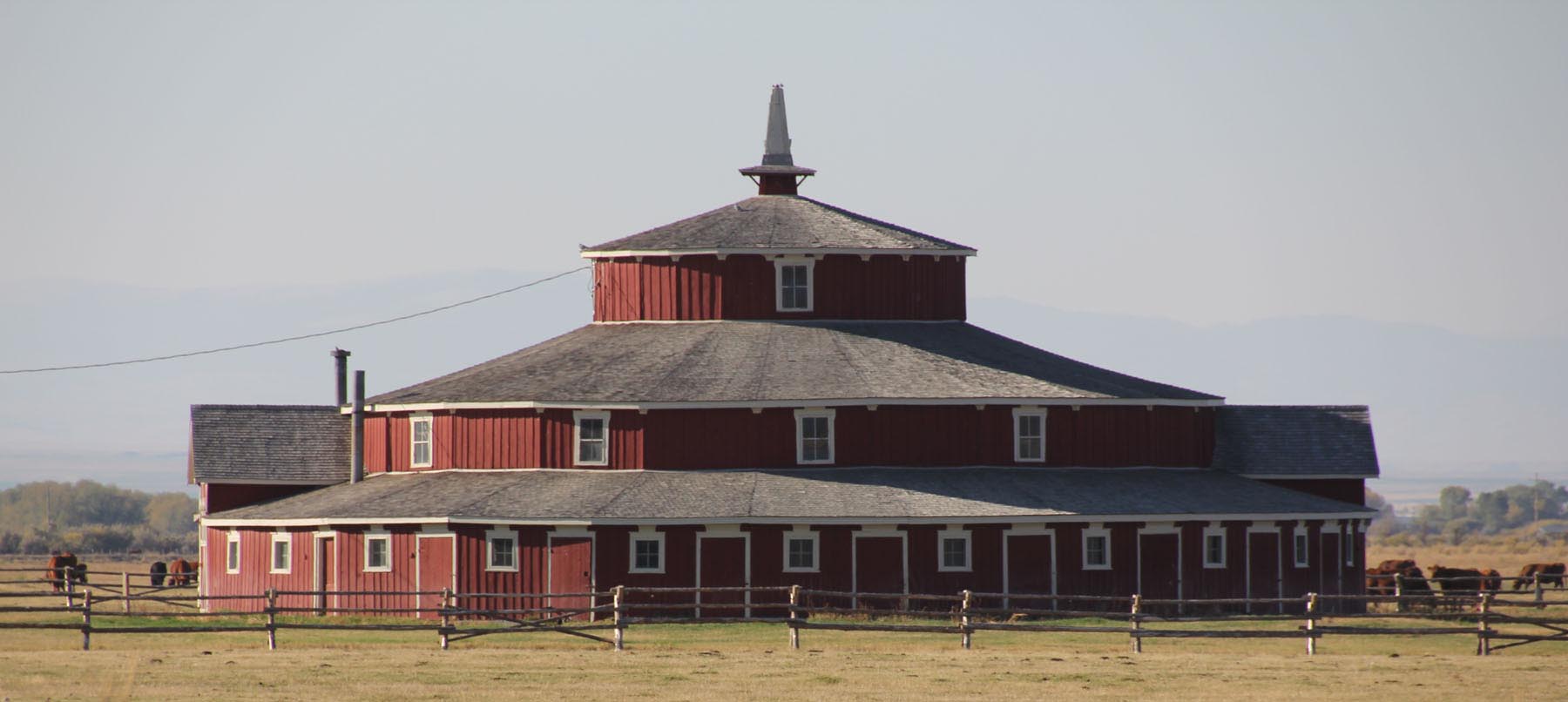
The old round barn just outside Twin Bridges, Montana was built in 1882 by Noah Armstrong, one of the lesser known Copper Kings, who was at that time superintendent of the Glendale smelter and discoverer of the Hecla mine in western Montana. Being from Kentucky, Armstrong had a love for horses and horse racing. He purchased the ranch in 1882 calling it the Doncaster Ranch after one of his favorite race horses. He then built a magnificent three-story round barn in which to raise and train race horses. One of the reasons he built it round was so the horses could be exercised in the winter on the indoor track on the ground floor. The ground floor also had box stalls for the horses as well as a saddle/tack room, veterinarian’s room, grain bins and office and living quarters for the jockeys or stablemen. The second story housed hay which could be fed to the horses on the ground floor, through openings or chutes on the second floor. The third floor had a large water tank which was pumped there from the well which was underneath the barn and a windmill which was atop the barn. Water could then be pumped anywhere in the barn, under pressure. There was also a freight elevator to transport the hay, grain and anything else to the second floor. This was quite a fancy barn for the day. There was even a carved horse scene above the front doors of the barn. The barn’s claim to fame, however, was raising Montana’s only Kentucky Derby winner, Spokane, who won the race in 1889. Actually, at that time in history he was the equivalent of a Triple Crown winner, the slate of races being different than they are now.

This article is published in our printed in Winter 2012 newsletter, The Barn Door.

__

Can you imagine an America without barns dotting the plains or hills? We can’t. Join us in preserving our heritage. Before it is lost. Join us

Things will be warming up at our 2013 Winter Meeting!

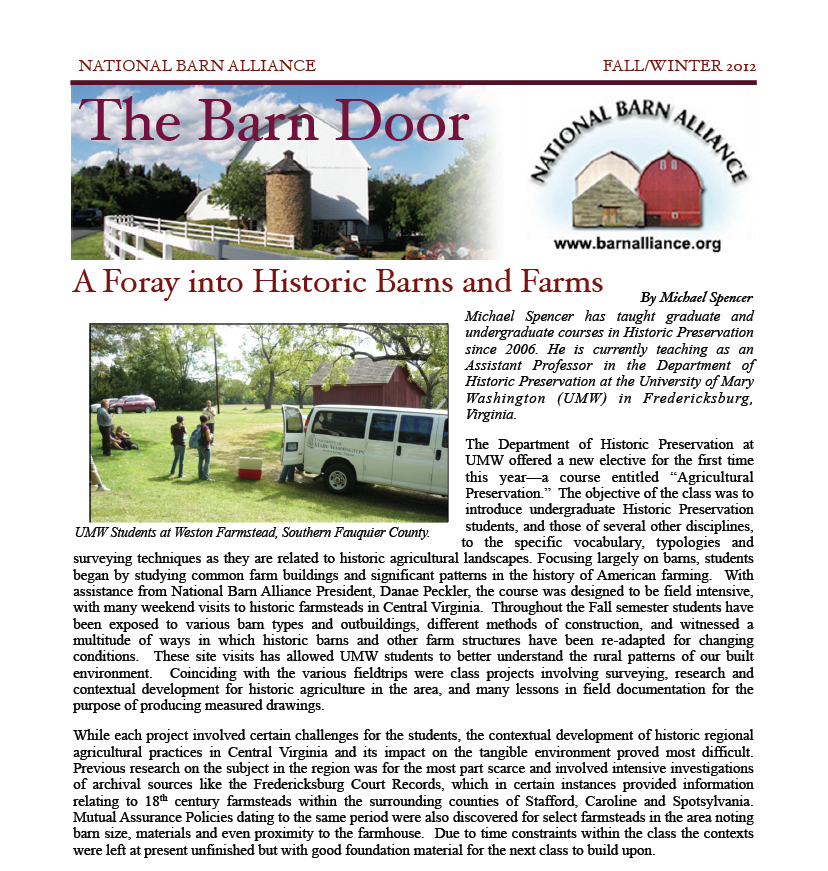
Preservation students from the University of Mary Washington at Weston Farm in Fauquier County, Virginia, where they documented several barns and outbuildings.

Preservation students from the University of Mary Washington examined several barns and outbuildings at Weston Farm in Fauquier County, Virginia.

As some of our members may already be aware, we are holding our Winter Board Meeting in Fredericksburg, Virginia, in partnership with the University of Mary Washington on February 15th-17th, 2013.  The focus of this year’s meeting, building mutually beneficial partnerships, could not be more timely given the economic climate!

Special guests at this year’s meeting include undergraduate and graduate students, many in Historic Preservation programs, who will present their work to research and document historic barns and farms in Virginia, Maryland, and Delaware. Additional speakers, as well as a roundtable discussion, are planned to elaborate on selected successful partnerships in the barn preservation community.  The Board will also conduct work sessions to review our mission statement and action plan to ensure the NBA’s continued growth and relevance to the barn preservation movement at large.

We will be sure to provide additional information and updates on our efforts – so please stay tuned.  You can like us on Facebook, follow us on Twitter, watch us on YouTube, and visit us anytime you want at www.barnalliance.org!

Timber Framers Guild Conference October 17-21

Timber Framers Guild is holding their 2012 Eastern Conference in Leesburg, VA in the beautiful National Conference Center from October 17 until 21.

They have an amazing program organized with diverse workshops around timber framing. Such are the offerings:

– History of Timber Framing

– Timber Framing Design with StretchUp

– Fifty Shades of Green

– Timber Framing for Commercial Construction

There will be fun activities… music, fun, and axe throwing!

The Timber Framers Guild is a partner organization with the National Barn Alliance.